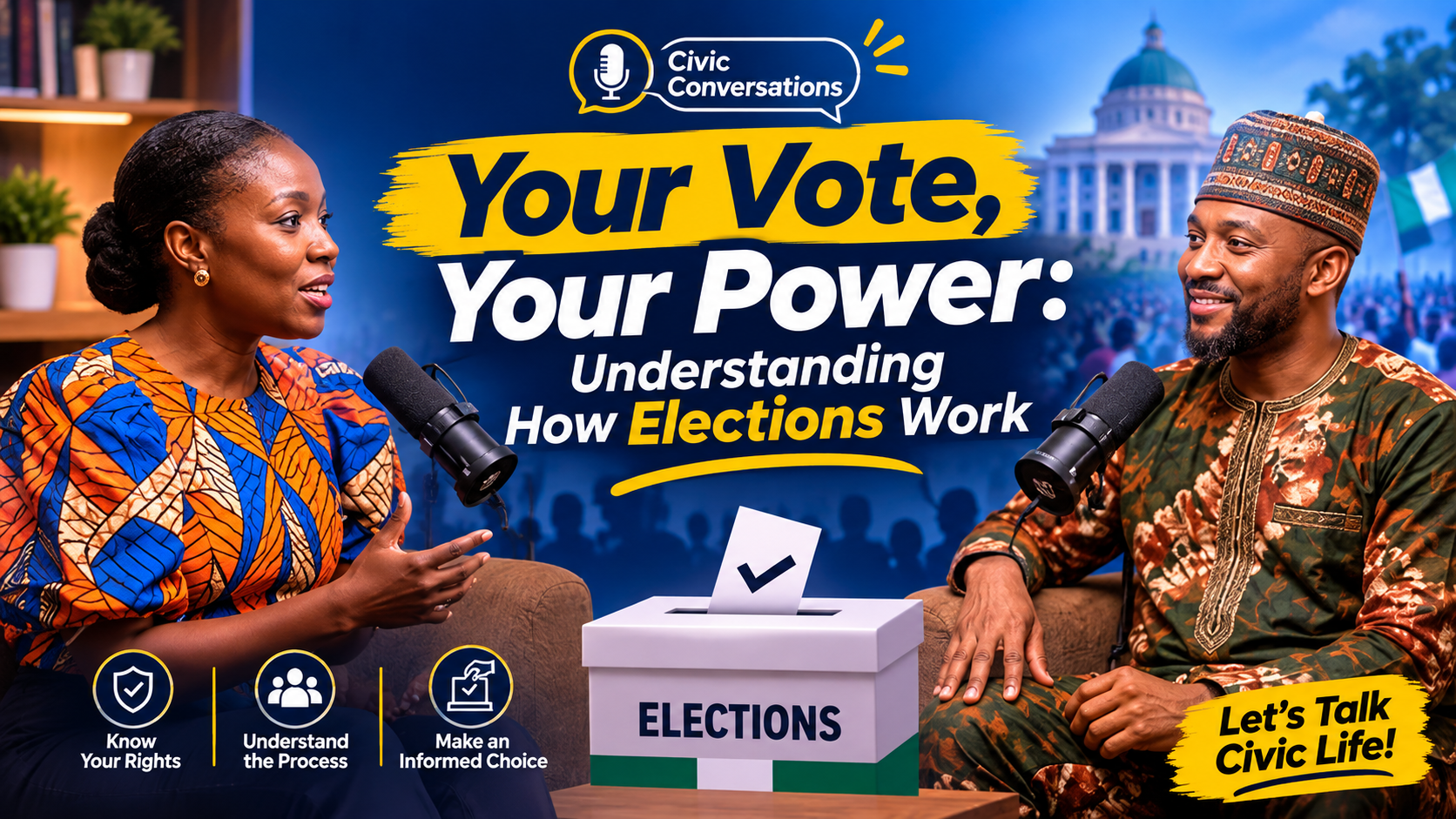
Your Vote, Your Power: Understanding How Elections Work
Understand how elections work in Nigeria, from voter registration to the declaration of a winner. In six short lessons, learn the role of INEC, what happens at polling units, how votes are counted and how election results are verified. No prior knowledge of the electoral process is needed.
- Beginnerlevel
- 1 a dayon WhatsApp
What you'll be able to do
- Identify the different elections conducted in Nigeria and understand the official election timetable.
- Describe voter registration requirements and explain the importance of the voters' register.
- Identify the different officials and representatives present at a polling unit and explain their responsibilities.
- Identify official channels for checking election results and verifying electoral information.
About this course
Your vote is important, but do you know what actually happens after you cast your ballot?
Who organises elections in Nigeria? What happens at your polling unit? How are votes counted, verified and transmitted? And who has the authority to declare a winner?
Your Vote, Your Power: Understanding How Elections Work is a short, practical course designed to help Nigerians understand the electoral process and make more informed decisions as voters.
Across six engaging lessons, you'll follow an election from the preparation stages to the final declaration of results. Complex election procedures are explained using everyday language, relatable stories and simple visual demonstrations. You don't need previous knowledge of politics or the electoral system to follow along.
Lesson 1: Who Runs Our Elections?
Discover the role of the Independent National Electoral Commission (INEC), understand the different elections held in Nigeria and learn about the election timetable and the laws that guide the process.
Lesson 2: From Citizen to Voter
Learn who is eligible to register as a voter, what the voters' register means, why registration matters and how to check your voter registration status.
Lesson 3: The Rules of the Race
Understand how candidates emerge, what political campaigns can and cannot do, when campaigns must stop and why practices such as vote buying and impersonation are against the law.
Lesson 4: Inside the Polling Unit
Find out who is present at a polling unit and what each person does. Understand the responsibilities of presiding officers, party agents, election observers and security personnel, as well as why votes are counted publicly.
Lesson 5: How Your Vote Becomes a Result
Follow the journey of election results from the polling unit through the different collation levels. Learn about result sheets, how results are compiled and where to find official election results.
Lesson 6: Declaring the Winner
Understand who officially declares election winners, the requirements candidates must meet to win, what happens when no candidate meets the required conditions and how election disputes can be resolved through the courts.
Every lesson includes simple explanations, relatable scenarios and quick knowledge-check questions to help you test what you've learned.
You'll also receive practical learning resources, including a visual ballot journey poster, election myth-or-fact cards, a plain-language election word list and a key dates guide.
The course is designed for Nigerians aged 18 and above, including first-time voters and people who may have little formal education. Lessons are short and accessible, with key information explained verbally and reinforced through visuals.
This is a strictly non-partisan course. It does not promote any political party, candidate or ideology. Its purpose is to help citizens understand the process, recognise their rights and responsibilities, and know where to find reliable election information.
An informed voter understands more than who is on the ballot. They understand how the entire process works.
Read moreShow less
Who it's for
Designed for Nigerian adults aged 18 and above, including first-time voters, students, working professionals and citizens who want to understand how elections work and participate more confidently in the democratic process.
How you'll learn on WhatsApp
- Say helloTap the button and send the message. No app or account to set up.
- A lesson a dayA short video, then one quick question to lock it in.
- At your paceSay lesson any time for the next one.
Lessons arrive in your WhatsApp chat. Tap through an example of each part below.
Accreditation
Join the waitlist and I'll message you on WhatsApp the moment it opens, so you can start straight away. Nothing to pay, ever.
Join the waitlist on WhatsApp